Beyond Mileage: How Ascent Shapes Elite Mountain Races
"It is not just a race against the clock, but a calculated struggle against the very shape of the earth."
Designing a long-distance mountain running course is an exercise in managing gravity, not just miles. While flat-ground runners focus on pace, mountain runners must contend with the brutal reality of vertical gain and technical terrain.
* Understanding Vertical Ratios: The balance between total distance and elevation gain defines the true difficulty of a course. * Technical Design: True mountain courses test physical limits through cumulative ascent, not just linear mileage. * Strategic Training: Managing energy during climbs and preventing injury during descents are the two pillars of survival.
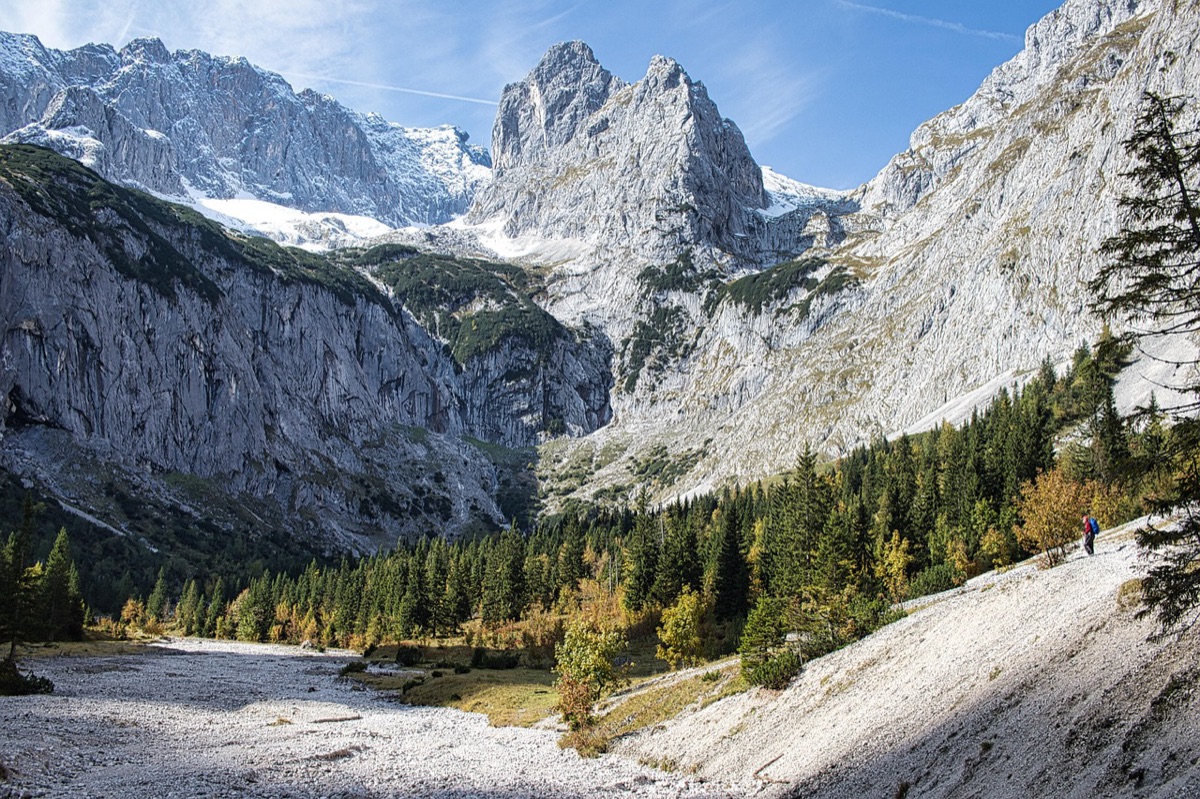
Why elevation matters more than distance
The clock hits 4:00 AM, and a thick, freezing fog clings to the trailhead. I pull my laces tight, feeling the sharp grit of a granite pebble beneath my toe. Today, I am not facing a 25-mile paved road; I am facing a 3,000-meter wall of vertical struggle.
In mountain running, distance represents physical movement, but elevation gain represents true difficulty. A 10-mile flat run and a 10-mile run with 3,000 feet of climbing are entirely different sports.
When analyzing a course, many people make the mistake of looking only at the total mileage. However, the essence of mountain running lies in the ratio of ascent to descent.
For example, a 45.2 km course with 3,130 m of total ascent and 2,720 m of total descent suggests a highly technical, steep environment. These numbers mean the runner isn't just running; they are constantly battling gravity.
Rapid changes in elevation put unpredictable loads on the muscles. Therefore, professional course design focuses on strategic elevation changes to push physical limits rather than just extending the distance. But there is a common pitfall in this process.

What do I need to know to design a course? The midday sun beats down on a topographic map spread across a wooden table. Red lines zig-zag across the paper, looking less like a path and more like a jagged barrier.
International standards, such as those used in global competitions, define a course by its distance and elevation profile. This ensures fairness and allows athletes to select events that match their specific physiological strengths.
When evaluating technical requirements, three core elements stand out:
- Elevation Gain Ratio: The higher the elevation gain relative to the total distance, the more "technical" the course is classified.
- Ascent vs. Descent Balance: Courses with minimal difference between ascent and descent are often loops, while large differences create "point-to-point" challenges.
- Terrain Complexity: Beyond simple slopes, sections involving rock scrambles or steep scrambles increase the perceived difficulty far beyond the raw numbers.
For instance, an 86.9 km course with 6,500 m of ascent and 6,920 m of descent is an extreme endurance test. This data is not just a statistic; it is the foundation for an athlete's nutrition and pacing strategy.
| Category | Skyrunning Style | Mid-Distance Trail | Ultra-Distance |
|---|---|---|---|
| Primary Focus | Steepness & Reactivity | Sustained Aerobic Effort | Energy Management |
| Elevation Profile | High gain-to-distance ratio | Mix of climbs and flats | Massive cumulative gain |
| Technical Demand | Explosive power | Aerobic base | Mental grit & nutrition |
But the climb is only half the battle.
What could go wrong with steep descents? The sun is setting, and a dull, heavy ache throbs in my knees as I navigate a steep descent. Every time my foot slips slightly on a loose rock, my heart hammers against my ribs, but there is no stopping now.
While many runners fear the uphill, the descent is often where the most significant injuries and exhaustion occur. Descent profiles must be engineered with precision.
Descending creates specific technical challenges:
* Eccentric Contraction: When running downhill, muscles must lengthen while under tension. This causes microscopic muscle damage, which can lead to total exhaustion in the latter half of a race. * Impact and Joint Load: On a 45.2 km course with 2,720 m of descent, the impact on knees and ankles is immense. * Technical Drop-offs: Sudden, steep descents test a runner's balance and significantly increase the risk of falls.
A professional designer must distribute steepness or adjust technical difficulty to ensure runners can finish safely. However, data alone doesn't tell the whole story.
Comparing course difficulty through data
I sit in a mountain hut under a canopy of stars, looking over my data sheets. The combination of elevation and distance captures the exact moment my exhaustion met my determination. According to the World Bank, the world recorded share of internet users of 73.6% in 2025.
To understand how different races feel, we can look at various data profiles. These numbers define the character of each discipline.
* Short-Distance Skyrunning Style: A 6.4 km distance with 985 m of elevation difference represents a highly vertical, explosive course. * Mid-Distance Trail Style: A 15.0 km distance with 750 m of elevation difference is relatively moderate, focusing more on maintained speed. * Extreme Ultra-Distance Style: An 81.2 km distance with 5,410 m of total ascent and descent represents an extreme test of endurance and altitude adaptation.
These differences dictate how a runner must train. A 7.5 km course with 375 m of ascent is a different physiological beast than a 44.5 km course with 3,660 m of ascent. So, how do we prepare?

Training strategies: conquering height and distance
The air at the summit is thin and sharp, stinging my lungs with every breath. My clothes are soaked with sweat, but the sense of accomplishment makes the cold bearable.
Training for long-distance mountain running is not just about running more miles. It requires a systematic, data-driven approach.
- Vertical Training: Focus on elevation gain rather than distance to build the specific strength needed for steep climbs.
- Downhill Conditioning: Include eccentric loading exercises to prepare legs for the impact of descents.
- Terrain Adaptation: Train on various surfaces—rocks, dirt, and sand—to build ankle stability and balance.
- Fueling Strategy: On long courses, managing the caloric deficit is vital, especially as digestion can change at high altitudes.
Always start with data that reflects your current level—perhaps a 7.8 km route with 400 m of elevation—and increase difficulty incrementally. But training is nothing without safety.
Safety guidelines and precautions
A sudden downpour turns the trail into a muddy slide, obscuring my vision. The wet rocks are slick, and my body temperature begins to drop rapidly.
Mountain running is beautiful but inherently dangerous. It is vital not to let technical course design lead to reckless decisions.
* Altitude Awareness: Be prepared for hypoxia (low oxygen) on courses that gain significant elevation quickly. * Weather Response: Mountain weather changes instantly. Always carry waterproof layers and emergency thermal gear. * Risk Recognition: Always stay aware of immediate hazards like steep drops or rockfall zones, and never push past your absolute limit. * Leave No Trace: Respecting the environment is a fundamental part of sustainable mountain sports.




Comments 0