4,095m Kinabalu: Mastering the Ascent to Low's Peak
"The transition from the humid rainforest to the granite peaks is not just a change in scenery, but a test of will against the thinning air."
Reaching the summit of Mount Kinabalu is a transformative experience that separates casual hikers from true mountaineers. To succeed, you must master the transition from the base camp to the high-altitude scramble through careful timing and physical preparation.
* Final Gear Check: Prioritize layered insulation and headlamps for the pre-dawn push. * Timing is Everything: Most climbers use Laban Raut as a staging ground to manage acclimatization. * Temperature Shifts: Prepare for freezing temperatures at the summit, regardless of the tropical base. * The Reward: Standing at 4,095 meters offers a view of the world below the clouds.
Why Kinabalu? Understanding the Majesty of Southeast Asia’s Pinnacle
The smell of damp earth and moss fills the air as you step onto the trailhead, the sounds of the jungle slowly fading behind you. You look up at the massive granite silhouette looming through the mist, realizing that the journey has truly begun.
Mount Kinabalu stands as a titan in Southeast Asia, rising to an elevation of 4,095.2 meters. It is a massive pluton of granite that continues to grow, gaining roughly 5 mm (0.20 in) of height per year. This geological vitality makes every step feel like you are climbing a living monument.
For those seeking the ultimate trekking experience in the region, this peak represents a perfect blend of biological diversity and sheer vertical challenge.
How will I get from base camp to Laban Rata? A heavy backpack rests against your shoulders as you navigate the winding, root-tangled paths of the lower slopes. The sun is high, and the humidity makes every breath feel heavy, but the steady rhythm of your boots provides a sense of progress.
There are two primary ways to begin this journey. The Timpohon Gate is a common starting point, located 5.5 km (3.4 mi) from the Kinabalu Park Headquarters at an altitude of 1,866 m (6,122 ft). Alternatively, some hikers begin at the Mesilau Nature Resort.
The two main trails eventually converge about 2 km (1.2 mi) before reaching Laban Rata.
Most climbers opt for a two-day itinerary. In this common structure, hikers spend the first day ascending to the Laban Rata Resthouse, situated at 3,270 m (10,730 ft), to sleep and acclimatize.
While a single-day push is technically possible, staying overnight at the base camp is the standard method to prepare the body for the final ascent.
But how do you actually manage the transition from the jungle to the rock?
How do I make the final push to the summit? The alarm clock rings in the pitch-black darkness of the hostel, and the air feels noticeably thinner and sharper against your skin. You pull on your heavy jacket, click your headlamp into life, and step out into the cold to begin the most grueling leg of the journey.
The final push from Laban Rata to Low's Peak is the crucible of the climb. This last stretch is roughly 2 km (1.2 mi) of steep, rocky terrain that requires significant mental and physical fortitude.
Most people accomplish this specific portion of the climb in 3 to 6 hours, depending on their fitness and the pace of the group.
Because the altitude increases rapidly during this phase, acclimatization is the most critical factor for success. Pushing too hard too fast can lead to altitude sickness, so maintaining a steady, slow pace is vital.
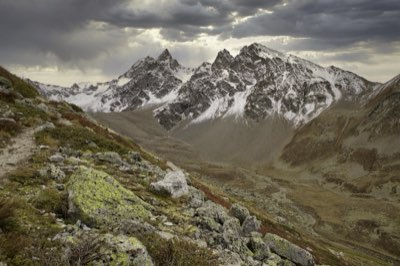
The transition from the vegetated slopes to the sheer granite slabs marks the transition from trekking to true mountaineering.
However, the real test begins when the temperature drops and the oxygen disappears.

Summit Day Survival: Gear, Timing, and High-Altitude Protocol
Your fingers are numb inside your gloves as you grip the cold rock, and the wind howls through the cracks in the granite. You check your watch, realizing that the window for the sunrise view is rapidly approaching.
Temperature management is the difference between a successful summit and a dangerous descent. The temperature at the summit of Mount Kinabalu can drop significantly depending on the season.
In the current 2026 climbing season, travelers should note that from December to January, temperatures can range from −4 to 8 °C (25 to 46 °F).
During the June to September period, the range is slightly warmer, typically between 3 to 12 °C (37 to 54 °F).
| Season | Temperature Range (Celsius) | Temperature Range (Fahrenheit) |
|---|---|---|
| Dec - Jan | −4 to 8 °C | 25 to 46 °F |
| Jun - Sep | 3 to 12 °C | 37 to 54 °F |
To survive the summit day, you must follow a strict protocol:
- Layering: Wear moisture-wicking base layers and a heavy down jacket for the summit push.
- Hydration: Drink water consistently to combat the drying effects of high altitude.
- Pacing: Do not race the group; keep your heart rate steady to manage oxygen levels.
- Light: Ensure your headlamp has fresh batteries, as the ascent begins in total darkness.
When I attempted this climb in late 2025, I realized that even the best gear cannot compensate for poor pacing. If you push too hard during the first hour of darkness, you will hit a wall long before you reach the peak.
It is important to note that these strategies assume a baseline level of physical fitness. High-altitude climbing is not for everyone, and those with underlying cardiovascular issues or severe altitude sensitivity should consult a medical professional before attempting the ascent.
Beyond the Summit: Post-Climb Reflections & Preservation
The sun begins to crest over the horizon, painting the clouds in hues of orange and pink, and for a moment, the exhaustion vanishes. You stand on the peak, looking down at the world you just conquered, feeling a profound sense of quiet accomplishment.
Reaching the summit is only half the battle; the descent is often where injuries occur due to fatigue. It is essential to maintain focus and move carefully during the trek back down to the lower camps.
Throughout the entire journey, adhering to Leave No Trace (LNT) principles is mandatory to protect the delicate alpine environment of the park.
The visual reward of the sunrise over the clouds is the ultimate payoff for the physical struggle. It serves as a reminder of why hikers brave the cold and the thin air: to stand where the earth meets the sky.

Comments 0