Testing Limits: 81km Races vs. Short Vertical Climbs
"The difference between a casual jog and a world-class mountain race lies entirely in the raw, unforgiving geometry of the earth beneath a runner's feet."
Selecting a venue for a global mountain running championship is not merely about finding a beautiful view; it is an exercise in geomorphology, atmospheric science, and human endurance.
* Topographical Variety: Race design ranges from high-altitude glacial terrains requiring extreme acclimatization to subtropical, humid environments that test thermoregulation. * Verticality vs. Distance: Modern race profiles vary wildly, from short, explosive climbs with nearly 1,000 meters of gain over just a few kilometers to massive, 80-kilometer endurance feats with over 5,000 meters of ascent. * Logistical Complexity: Successful venues must manage the tension between established trail infrastructure in Europe and the rugged, often remote, permitting processes in high-altitude Asian ranges.

What defines a world-class mountain running venue?
At 5:30 AM, a runner stands at the trailhead in the pre-dawn chill, looking up at a jagged skyline that promises nothing but gravity and grit. The air is thin, the shadows are long, and the path ahead is a zig-zag of rock and dirt.
A world-class venue is defined by its ability to provide a "pure" mountain experience while remaining technically viable for high-level competition. This requires a specific spectrum of terrain, ranging from high-altitude glacial landscapes to mid-latitude valleys shaped by fluvial erosion.
The critical metric for any organizer is the relationship between distance and vertical gain. A race might be a short, sharp test of power, or a long-distance odyssey of attrition.
For example, a short course might feature a 6.4 km distance with a 985-meter difference in height, forcing runners to contend with steep, unrelenting gradients. Conversely, an ultra-distance race might cover 81.2 km with a staggering 5,410 meters of total ascent and descent.
The goal is to create a profile that tests different physiological systems. Some venues favor sheer verticality, where the primary challenge is the climb itself, while others focus on sustained endurance across undulating, technical terrain.
This variety ensures that the championship tests not just the strongest legs, but the most versatile athletes. But how do these environments change when the climate shifts from alpine to tropical?
Why does the climate change the game?
The humidity hits like a physical weight as a runner steps into a dense, green canopy where the sun barely penetrates the thick foliage. Every breath feels heavy, and the ground underfoot is often a mix of slick mud and tangled roots.
In Southeast Asia, specifically around regions like Chiang Mai, the topographical challenges are often atmospheric as much as they are geological.
While the absolute elevation might not reach the heights of the Himalayas, the subtropical climate introduces extreme humidity and unpredictable monsoon-driven weather. These factors turn a moderate incline into a grueling test of heat management and cardiovascular efficiency.
Furthermore, the cultural integration of these routes adds a layer of complexity. In many parts of Asia, running paths often follow ancient pilgrimage routes or traditional trade corridors.
Integrating a modern, high-intensity race circuit into these culturally significant landscapes requires a delicate balance of respect for local tradition and the needs of modern competitive athletics. However, the stability of the terrain is often the next great hurdle.
How do European and Asian terrains compare?
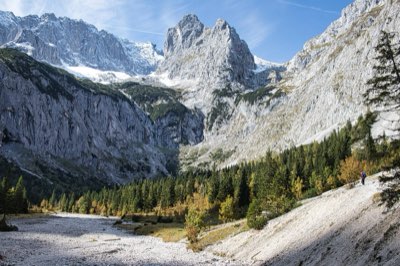
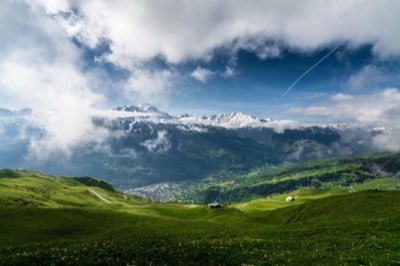
The sound of cowbells echoes across a high alpine meadow as a runner navigates a narrow, rocky switchback. The peaks are sharp, white-capped, and look like they were carved by a giant's chisel.
Europe, particularly the Alps and the Pyrenees, offers a different kind of challenge: geological stability and highly developed infrastructure.
The established trail networks in regions like the Dolomites or the French Alps allow for complex, winding race courses that can be precisely mapped and managed.
When looking at race metrics, European venues often lean toward high-technicality terrain. While an Asian race might be a straight shot up a muddy slope, an Alpine race often incorporates technical rock scrambles and rapid changes in elevation.
For instance, a race might feature a 14.3 km distance with 775 meters of ascent, requiring quick, nimble footwork on uneven surfaces.
The interplay between mountaineering tradition and modern ultra-running is strongest here. Many of these race routes follow historic mountaineering paths, meaning runners are often moving through terrain that has been studied and climbed for generations.
This established history provides a stable framework for organizers, but it also means runners are often competing on well-worn, highly visible trails. But what do the actual numbers tell us about the scale of these challenges?
What are the real global race metrics?
A runner checks their GPS watch, seeing a digital readout that reveals a terrifying reality: 5,000 meters of climbing ahead over a distance that seems deceptively short. The numbers on the screen don't lie, but they don't tell the whole story of the effort required.
According to World Bank data, the world recorded share of internet users of 73.6% in 2025.
The data behind global mountain running reveals a massive disparity in race design. Comparing a short-distance event to a long-distance ultra reveals the sheer range of human capability.
| Race Type | Typical Distance | Typical Total Ascent/Descent | Primary Challenge |
|---|---|---|---|
| Short Vertical | 6.4 km - 7.8 km | 400 m - 985 m | Explosive power & steepness |
| Mid-Distance | 14.3 km | 775 m | Sustained climbing & technicality |
| Ultra-Distance | 44.5 km - 81.2 km | 3,660 m - 5,410 m | Endurance, pacing, & attrition |
The physiological demands vary wildly based on these numbers. A 6.4 km race with 985 meters of vertical difference is a sprint of sorts, requiring high anaerobic capacity.
In contrast, an 81.2 km race with 5,410 meters of ascent is a test of total systemic resilience, where the descent is just as punishing as the climb.
Logistically, these metrics dictate everything from permitting to gear requirements. A high-altitude, high-ascent race requires strict acclimatization protocols and specialized gear for rapid weather changes.
A lower-altitude, high-distance race might focus more on hydration management and weight-to-power ratios. But beyond the numbers, there is the living, breathing world that the runners pass through.
How do we protect the mountain?
The runner pauses to tighten a lace, looking down at a delicate alpine flower tucked into a crevice of rock. They step carefully, mindful of the thin layer of soil that holds the life of the mountain.
With the rise of global mountain running, the impact on fragile high-mountain ecosystems has become a primary concern. High-altitude environments are often characterized by slow growth rates and sensitive soil structures.
A single heavy race weekend can cause significant erosion if not managed correctly.
Adhering to Leave No Trace (LNT) principles is not just a suggestion; it is a necessity for the survival of these venues. Organizers must design courses that minimize impact on sensitive flora and avoid disturbing local wildlife corridors.
This often means restricting runners to existing trails or temporary, highly controlled paths.
The relationship between the race and the host community is also vital. While these events bring tourism and economic activity, they must not overwhelm local resources or degrade the natural beauty that makes the venue desirable in the first place.
Sustainable race management means ensuring that the mountain remains as pristine for the next generation of runners as it was for the competitors today.
Note on limitations: It is important to recognize that no race design is perfect. There is always a trade-off between providing a challenging, technical course and minimizing the physical impact on the trail and the local ecosystem.
How to prepare for a mountain race: A step-by-step guide
When I first attempted a high-verticality race in the Alps, I realized that standard road training was almost useless. The preparation requires a shift in mindset and a specific sequence of physical readiness.
If you are planning to tackle a mountain event, follow this progression:
- Build an Aerobic Base: Focus on low-intensity, long-duration efforts to build mitochondrial density and cardiovascular efficiency.
- Introduce Vertical Loading: Incorporate specific climbing sessions. Use stairs, steep hills, or treadmill inclines to train the legs for sustained ascent.
- Master Technical Descent: Practice moving quickly and safely on uneven terrain. This builds the stabilizer muscles and proprioception needed to prevent injury.
- Execute Acclimatization: If the race is at a high altitude, spend time at a similar elevation at least two weeks prior to the event to allow your body to adjust to lower oxygen levels.
- Test Gear and Nutrition: Use your training runs to test specific gear—like hydration vests and trail shoes—and to find a nutrition strategy that works under physical stress.



Comments 0