Himalaya lunch course guide: Width varies, best to know
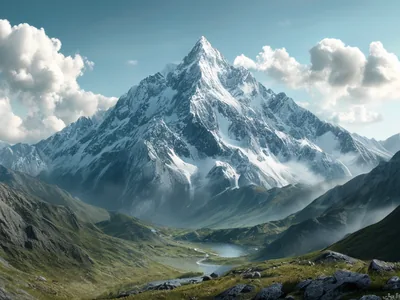
"The Himalayan mountain range runs west-northwest to east-southeast in an arc 2,400 km (1,500 mi) long."
Planning a journey through this massive arc requires understanding the scale of the terrain and the geological forces at play. This guide provides a Himalaya lunch course guide to help travelers understand the vastness of the range, from its varying widths to its active rising.
Key takeaways include understanding the massive scale of the range, recognizing the geological activity, and noting the environmental changes affecting the glaciers.
What are the dimensions of the mountain range?

At dawn, he shields his eyes against the blinding light while staring at the vast, sweeping arc of the himalaya.
A traveler stands at a high pass, looking across a valley that seems to stretch into infinity. The massive scale of the terrain is the first thing one notices when beginning a Himalaya lunch course guide.
The range spans a significant distance, running in an arc 2,400 km (1,500 mi) long. According to Wikipedia, the width of the range also varies greatly, from 350 kilometres (220 miles) in the west to 151 km (94 mi) in the east.
This variation means that different sections of a trek will offer vastly different landscape profiles.
The range spans several hundred miles across the continent, reaching peak elevations that pierce the upper atmosphere.
How does the geology affect the landscape? Himalaya lunch course guide
A hiker touches the rugged, uneven rock of a mountain slope, feeling the immense pressure of tectonic movements. Understanding these forces is essential for anyone seeking a Himalaya climbing guide to navigate the terrain.
The landscape is shaped by powerful plate movements. The Indian plate is moving at 67 mm (2.6 in) per year, and over the next 10 million years, it will travel 1,500 km (930 mi) into Asia. This movement contributes to the ongoing formation of the peaks.

The convergence of plates also drives vertical growth. Approximately 20 mm per year of the India–Asia convergence is absorbed by thrusting along the Himalaya southern front. This leads to the Himalayas rising by about 5 mm annually, making them geologically active.
Tectonic forces have created steep verticality and jagged ridges that define the horizon.
What is the nature of the underlying crust?
A geologist examines a sample of rock, noting the composition that supports the massive peaks above. This context is useful for those looking for Himalaya trekking route info.
The foundation of these mountains is unique compared to other regions. In contrast, the continental crust underlying dry land has an average thickness of 35 km (22 mi) and is rich in silica, which is less dense than basalt. This composition supports the massive heights of the range.
The crust consists of thick continental plates that have been folded and faulted over millions of years.
How much water is stored in the glaciers?
A trekker watches a distant glacier move slowly down a valley, a silent giant of ice and snow. This visual reminder of the environment is a core part of any Himalaya hiking course tips.

The range contains immense frozen reserves. The Himalayan range encompasses about 15,000 glaciers, which store about 12,000 cubic kilometres (2,900 cubic miles), or 3600–4400 Gt (1012 kg) of fresh water. These glaciers are vital for the regions below.
Massive ice sheets hold vast quantities of freshwater within their frozen layers.
What changes are occurring in the glacial environment?
A traveler observes the retreating edge of a glacier, noticing the exposed rock where ice once stood. This reality is a vital part of learning Himalaya trekking route info.
Environmental shifts are visible in the landscape. Studies have measured an approximately 13% overall decrease in glacial coverage in the Himalayas over the last 40–50 years. This loss indicates a changing environment for future travelers.
- Rising temperatures cause surface melting.
- Glacial retreat exposes previously covered rock.
- Increased runoff alters downstream water levels.
How to prepare for the geological scale?
A traveler checks their map against the massive horizon, preparing for the physical reality of the terrain. Using a Himalaya climbing guide helps in understanding these vast distances.
- Assess the width of your planned route, knowing it can range from 350 km to 151 km depending on the location. 2. Prepare for the geological activity of a rising landscape. 3. Monitor environmental changes, such as the 13% decrease in glacial coverage, to understand the terrain's evolution.

I looked at the map and realized how the 2,400 km arc would dictate our entire itinerary.
A limitation of this guide is that it focuses on geological and physical dimensions rather than specific seasonal weather patterns.
In this sequence, the first step is the most critical.
The same subject is also called Best Himalaya trekking routes.
This part also covers Himalaya altitude safety tips.
This part also covers Himalaya trekking gear guide.
This part also covers Himalaya hiking safety rules.
Himalaya altitude safety tips
Related
- Climbing guide: 48 tips for high altitude peaks
- Africa peak climb route: Kibo Summit Ascent Guide tips
How does the scale compare across the range?
The comparison of the range's width reveals significant differences across its length. The western portions of the Himalayan mountain range exhibit a considerably broader expanse compared to the eastern sections.
This variation in width suggests differing underlying geological stresses or crustal thicknesses across the arc.
What are the implications of plate movement?
The ongoing movement of the Indian plate dictates the current vertical growth of the Himalayan mountain range. This sustained convergence drives the uplift, causing the mountain range to rise at a measurable annual rate. This slow but relentless movement shapes the present topography of the region.
Travelers must account for these large-scale forces when planning any expedition into the Himalayan mountain range. Recognizing the dynamic nature of the crust is as important as understanding the visible peaks.
How does the crustal thickness influence the range's structure?
The continental crust beneath the Himalayan mountain range exhibits a specific thickness that influences its structural integrity. This foundation contrasts with other geological areas, providing the necessary support for the immense heights achieved by the Himalayan mountain range.
The thickness of this crust varies, supporting the range's considerable dimensions.
This underlying structure dictates how the immense pressures from plate convergence are accommodated. The crustal composition, being silica-rich, contributes to the stability required for the sustained uplift of the Himalayan mountain range. This composition is key to supporting the observed scale.

Comments 0